
What is stereotyping?
“The single story creates stereotypes, and the problem with stereotypes is not that they are untrue, but that they are incomplete. They make one story become the only story.” – Adichie, C.N. (2009)
Stereotyping is the act of making assumptions about an individual or a group of people, based on preconceived notions regarding one’s nationality, occupation, ethnicity, age or gender. It has the potential to be abused, leading to isolation, bullying and societal tension.
In what ways do stereotypes affect the way that we communicate with each other?
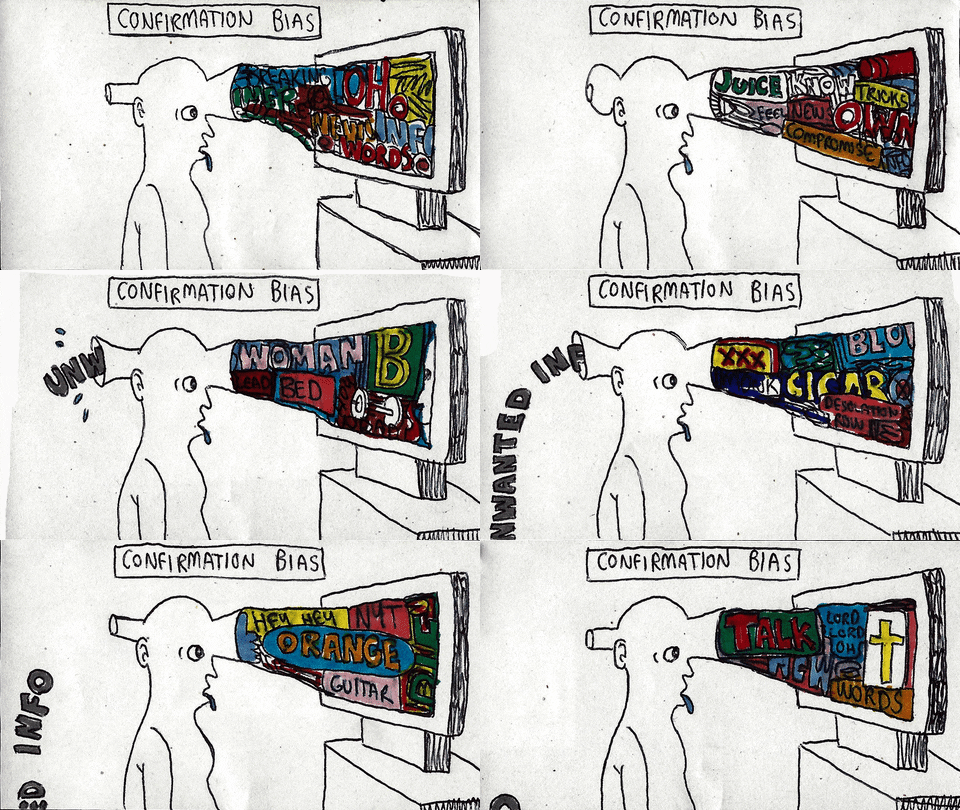
Stereotypes affect our communication by causing us to perpetuate confirmation bias, skewing our perception of others by overlooking their actual characteristics or values. Selective listening, a form of confirmation bias, leads us to only accept information that aligns with our beliefs and disregard information that contradicts them. This lack of openness to alternative perspectives only reinforces our false assumptions and prejudices, resulting in poor communication.

Stereotypes can also lead to a breakdown in communication as they can result in people avoiding certain individuals or groups, which can happen when people refuse to interact with them due to preconceived assumptions. This lack of interaction over time can solidify these perceptions, as there would be no opportunity for our beliefs to be challenged and corrected, creating a cycle of isolation and ignorance.
Past experience I had (or witnessed) in my daily life.
As a member of the majority population in Singapore, I have not personally experienced or felt the effects of stereotypes perpetuated against me. However, as a child, I observed the casual stereotyping of the migrant population in my surroundings.


Storyboard scenes created by Wayne, with http://www.storyboardthat.com
Even though I may not have fully understood the reasoning behind my grandmother’s actions at the time and even now, it still instilled in my thinking a sense of prejudice and danger surrounding the Bangladeshi migrant workers. This led me to actively avoid any form of interaction with these immigrants during my childhood. It was not until I had brief interactions with them when I grew older, that I realised they were just a group of hardworking individuals trying to make a living.
What are the implications of such events occurring in my social life?
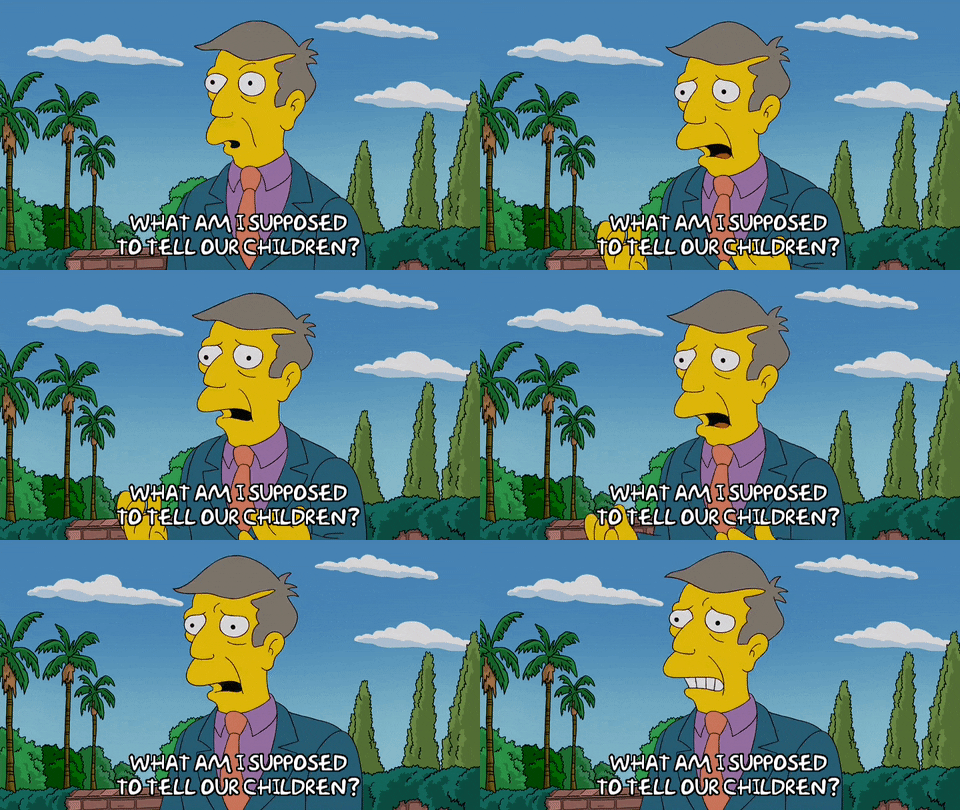
Such events occurring in my social life could have implications, not just for myself, but for future generations as well. If I did not actively recognise and challenge the stereotypes I held as a child, I risk perpetuating them in my behaviour and potentially passing them on to my children. This is because children who observe their parents displaying prejudice may be more likely to develop prejudice themselves. Therefore, it is essential to take the time to reflect on the stereotypes we might hold and actively interact with individuals from marginalised groups to break down these false perceptions.

On a grander scale, the implications of stereotypes and prejudice in our social lives can have significant consequences for society. When these harmful perceptions become shared beliefs within a generation, it normalises discrimination and inequality. For example, if Singapore were to viewed as a xenophobic society, it could lead to a decline in foreign investment and a loss of our competitive advantage. Foreigners might be less willing to relocate to Singapore and bring their skills and expertise if they feel unwelcome. It is not just a hypothetical scenario, there have already been several news articles written on this topic and Law and Home Affairs Minister K. Shanmugam (2021) has warned of the dangers of such prejudice. This highlights the importance of recognising and challenging stereotypes for the benefit of Singapore.
Conclusion
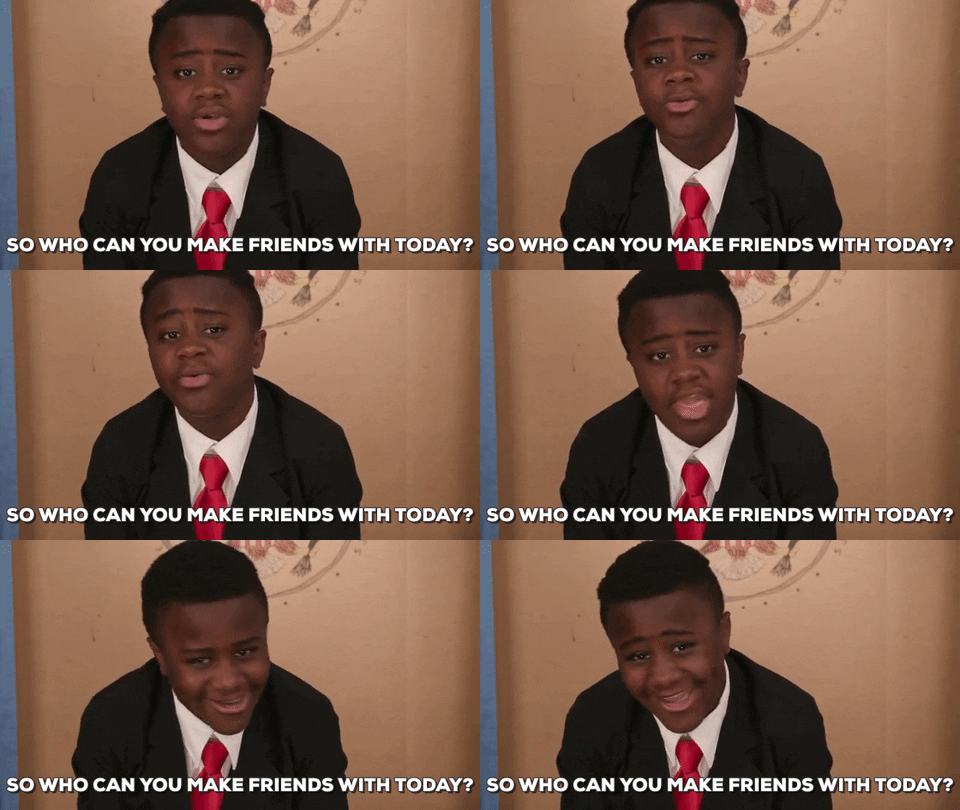
In conclusion, stereotypes can be abused in a way that causes us to engage in confirmation bias and avoid certain individuals or groups, resulting in a breakdown in communication and a vicious cycle of isolation and ignorance. Self-awareness and challenging these stereotypes are crucial. We should interact more with marginalised groups, break down these false walls and judge more holistically.
Reference List
Adichie, C.N. (2009) The Danger of a Single Story. Available at: https://ethos3.com/3-lessons-from-chimamanda-ngozi-adichies-the-danger-of-a-single-story/ (Accessed: 21 Jan 2023)
Galowich, D. (2018) ‘Understanding Biases And Their Impact On Our Perceptions’ Forbes, 19 September. Available at: https://www.forbes.com/sites/forbescoachescouncil/2018/09/19/understanding-biases-and-their-impact-on-our-perceptions/?sh=2d168b227859 (Accessed: 22 Jan 2023)
Linus, J. (2022) The Sneaky Way Confirmation Bias Tricks Our Brains. Available at: https://www.linkedin.com/pulse/sneaky-way-confirmation-bias-tricks-our-brains-jackson-linus (Accessed: 22 Jan 2023)
Schwartz, D. (2020) How Racism and Other Forms of Prejudice Can Infect Children. Available at: https://www.psychologytoday.com/us/blog/adolescents-explained/202006/how-racism-and-other-forms-prejudice-can-infect-children (Accessed: 21 Jan 2023)
Sin, Y. (2021) ‘Racism and xenophobic behaviour will become normalised if S’pore is not careful, warns Shanmugam’ The Straits Times, 11 May. Available at: https://www.straitstimes.com/singapore/racism-and-xenophobic-behaviour-will-become-normalised-if-spore-is-not-careful-warns (Accessed: 21 Jan 2023)
Sisti, C. (2018) Stereotypes Against Marginalized Groups Available at: https://womenchapterenglish.com/stereotypes-against-marginalized-groups/ (Accessed: 21 Jan 2023)
Tiayon, S.B. (2021) How Do Stereotypes Shape Your Judgment? Available at: https://greatergood.berkeley.edu/article/item/how_do_stereotypes_shape_your_judgment (Accessed: 21 Jan 2023)


 Welcome to my world.
Leave a comment